 English
 German
 French
 Russian
 Spanish
 Japanese
 Korean
 Portuguese
 Ukrainian
 Arabic
 Italian
Factors Influencing Wholesale Price Per Unit for Bulk Insulated Drinkware Orders
For businesses, organizations, or entrepreneurs sourcing insulated drinkware in bulk (think coffee shops, corporate gifting, event planners, or retail brands), understanding the drivers of wholesale pricing is critical to balancing budget, quality, and profitability. At BingoBottle, we’ve spent years helping clients optimize their bulk orders of tumblers, water bottles, and custom drinkware—here’s a deep dive into the key factors shaping your per-unit cost.
1. Order Quantity: The Foundation of Wholesale Pricing
Volume is the cornerstone of wholesale economics. Larger order quantities directly reduce the per-unit price due to economies of scale: fixed costs (like mold setup, design fees, or production line calibration) get spread across more units. For example, a 100-unit order of custom stainless steel tumblers might cost $15/unit, while a 1,000-unit order could drop to $8/unit—thanks to reduced setup costs per item and bulk material discounts. At BingoBottle, we offer tiered pricing (e.g., 100–499 units, 500–999 units, 1,000+ units) to pass these savings to clients.
2. Material Selection: Quality vs. Cost Tradeoffs
The type (and grade) of material defines both the product’s durability and its price. Common insulated drinkware materials include:
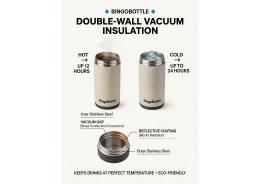
- Stainless Steel: Food-grade 304 or 316 stainless steel (for rust-resistance and safety) is pricier than plastics but offers longevity, heat retention, and premium branding appeal. Thicker steel or double-wall vacuum insulation (for extreme temperature control) adds cost.
- Plastic: BPA-free Tritan or polypropylene is budget-friendly but less durable for heavy use. Specialty plastics (like UV-resistant or insulated) still carry a premium.
- Ceramic/Glass: Stylish but fragile, these materials suit niche, low-impact use cases and add cost due to production complexity and shipping risks.
For example, a 304 stainless steel tumbler with vacuum insulation will cost more per unit than a basic plastic water bottle—even at the same order volume.
3. Customization & Branding: Personalization Drives Cost (and Value)
Customization—from logo printing (screen, digital, or UV print) to laser engraving, color matching, or unique mold designs—increases per-unit costs but boosts brand visibility. Here’s why:
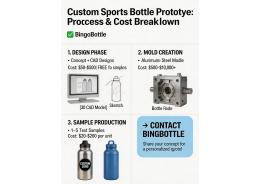
- Setup Fees: New molds, print plates, or design proofs require upfront investment (e.g., a custom-shaped bottle mold can cost $500–$5,000+).
- Production Time: Custom colors or complex prints slow production, raising labor costs.
- Waste Rates: Custom designs often have higher rejection rates (e.g., misaligned prints), increasing material waste.
Simple 1-color logo prints on a standard tumbler are more affordable than full-wrap digital prints or 3D embossed logos. At BingoBottle, we recommend balancing customization with cost: start with a standard product and add subtle branding for the best ROI.
4. Product Type & Design Complexity
Not all insulated drinkware is created equal. A basic 16oz tumbler with a slide lid costs less than a 32oz bottle with a flip-top straw lid, built-in tea infuser, or dual-wall vacuum insulation. Design complexity (e.g., multiple components, patented mechanisms, or ergonomic shapes) drives up production costs due to:
- More intricate tooling (molds for complex lids or bodies).
- Assembly labor (e.g., attaching straws, infusers, or removable parts).
- Quality control (testing seals, insulation, or component fit).
For example, a custom-shaped “globe” water bottle with a built-in compass (a novelty design) will cost far more per unit than a standard cylindrical tumbler—even with the same material and order volume.
5. Shipping & Logistics: Hidden Costs That Impact Price
Wholesale pricing doesn’t end at the factory. Shipping costs (and logistics decisions) heavily influence your total cost per unit:
- Transport Mode: Air freight is fast but expensive; ocean freight is cheaper for large volumes but slower (and subject to port fees, delays, or customs duties).
- Destination: Shipping to remote regions or international markets adds tariffs, import taxes, or last-mile delivery costs.
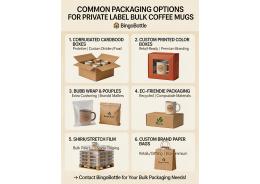
- Packaging: Custom packaging (e.g., gift boxes, branded sleeves) or extra protection for fragile items increases costs.
At BingoBottle, we help clients optimize shipping by consolidating orders, using freight forwarders, or negotiating bulk shipping rates—all of which reduce the per-unit logistics cost.
6. Seasonal Demand & Market Trends
Like most consumer goods, insulated drinkware follows seasonal demand cycles (e.g., peak sales in summer for water bottles, or Q4 for corporate gifting). During high-demand seasons, raw material prices (e.g., stainless steel, plastic resins) may rise, and suppliers might adjust prices to manage inventory. Conversely, ordering in off-seasons (e.g., late winter for summer products) can secure lower rates as suppliers clear excess stock.
Market trends also play a role: eco-friendly materials (like recycled stainless steel) or innovative features (smart temperature-display lids) can increase costs as they become industry standards.
7. Supplier Policies & Relationship Dynamics
Your partnership with the supplier (like BingoBottle) affects pricing in subtle but impactful ways:
- Payment Terms: Early payment discounts (e.g., 2% off for net-15 terms) reduce effective per-unit cost.
- Loyalty/Repeat Orders: Long-term clients often get preferential pricing, as suppliers value stable business.
- Minimum Order Quantities (MOQs): Stricter MOQs might limit flexibility but ensure lower per-unit costs (vs. suppliers with no MOQ but higher base prices).
- Returns/Defects: A supplier with a generous defect replacement policy reduces your risk, even if their base price is slightly higher.
Building a relationship with a trusted supplier (like BingoBottle) can unlock negotiated rates, faster lead times, and cost-saving advice (e.g., “Swap to a standard lid to cut 10% off your cost”).
Conclusion: Balancing Cost, Quality, and Strategy
When ordering bulk insulated drinkware, the per-unit price is a puzzle of volume, materials, customization, logistics, and market forces. The key is to align your goals (e.g., premium branding, budget efficiency, sustainability) with the right mix of these factors. At BingoBottle, we work with clients to identify cost-saving levers (e.g., optimizing order size, simplifying customization, or leveraging off-season pricing) without compromising on quality or brand impact.
Ready to get a tailored quote? Reach out to our team with your order volume, product preferences, and branding goals—we’ll help you find the sweet spot between cost and value.